 |
 |
 Good,
Bad, and Ugly of Anime on American TV: Getter Robo, Mazinger Z, Robotech, Starblazers,
Bionic Six, Mighty Orbots, The Hobbit, Secret of Nimh, Aeon Flux, Batman, Gargoyles, and
Duck Tales... like 'em or hate 'em, they have all influenced our lives during
childhood years. Reason why we kept on watching? Many reasoned with Saturday
morning escapism, cinematic experience not seen in typical cartoons, unique art forms, and
of course, plots full of background love and romance. Good,
Bad, and Ugly of Anime on American TV: Getter Robo, Mazinger Z, Robotech, Starblazers,
Bionic Six, Mighty Orbots, The Hobbit, Secret of Nimh, Aeon Flux, Batman, Gargoyles, and
Duck Tales... like 'em or hate 'em, they have all influenced our lives during
childhood years. Reason why we kept on watching? Many reasoned with Saturday
morning escapism, cinematic experience not seen in typical cartoons, unique art forms, and
of course, plots full of background love and romance.
|
What's
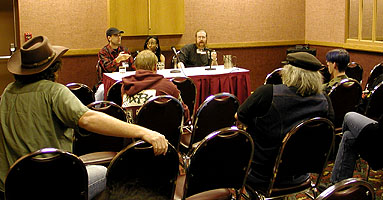
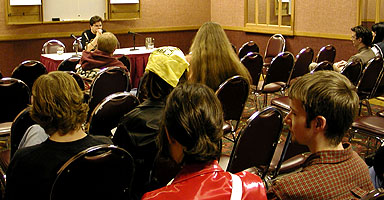
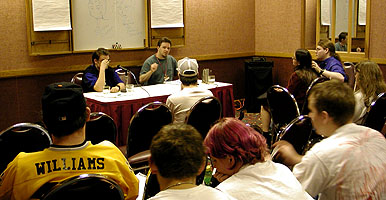
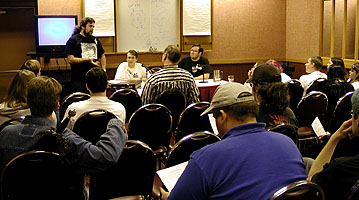
Wrong with Fandom?: One noteworthy observation: all the cosplayers are great but some
groups are getting too serious and too many cliques are forming in an era where fans should
work together to build the anime communities. Panelist Dave Merrill also expressed
missing the old days when tape trading was good and now has to buy anime that may or may not
be all that great. The conclusion: get back to basics and put all the true fan fun and
youthful energy back into the anime experience.
|
 |
 |
Nadelman
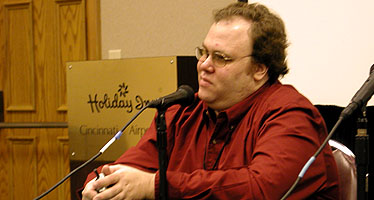
vs. Noodleman: Panelist Neil Nadelman faces the challenges everyday: difficult
colloquial and highly technical translations, legal constraints, and other issues as he
works hard with U.S. companies like Central Park Media, Pioneer, Bandai, and Right Stuf
International. He pointed out that anime is still a U.S. phenomena and Japan still
tries to do most of their translation work in-house to save money and do simultaneous
releases in America and Japan leaving bad feedback and mediocre translations for the anime
fans.
|
Publishing
Manga in the U.S.: Manga fans know the deal: Americans must work harder than the
Japanese to publish manga noteworthy of any amount of attention. That demands a lot of
self-esteem, patience, balance of insecurity and positive energy, honesty with your own
works, and especially the need to take harsh constructive and destructive criticism at a
professional level and be able to analyze what areas you need to improve upon, because as an
artist, you are always going to be improving as you develop your skills over time.
Every great artist takes on these challenges to gain respect, versatility, and credibility.
|
 |
 |
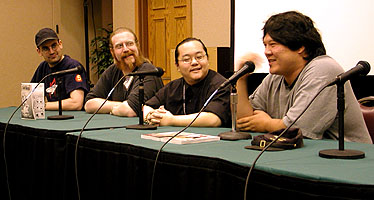
Fan Art: Noted fan artists Haze Man and James Dawsey tell it like it is: fan art is
based on existing anime or manga, while non-fan art is all original concepts and designs
from your own imagination. Highlights from the panel also included influences from
numerous anime video games, anime shows, and lifestyles of surrounding friends and
family. As such, not all fan art is the same, lending to wide variety of artistic
styles and unique sub-culture in the Artist Alleys.
|
Making Anime Music Videos: First and only impressions are key to a winning anime music
video as these experienced panelists point out. It's all about quality vs. quantity,
get rid of the inside jokes, avoid flash frames, taking breaks, don't rush projects, testing
out the video on very large screens, and discussing the uses of AVIs, MPEGs, DIVX, and
numerous other tools for video editing that will inspire a new generation of anime music
video lovers.
|
