 |
 |
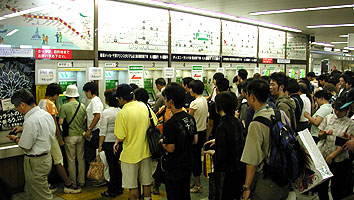
 Just like buying train tickets in the USA,
everyone purchases tickets at the station for a price equal to however
much you want to travel. You have an itinerary in mind, you look
at the map of station stops, do simple math to figure out how much it
costs to go from here to there and back, and buy the ticket. Handy
buttons on the automated purchasing stations show the most-used
denominations. From here on out, the JR Rails and other lines are
pretty cheap to use, typically 150 yen = $1.25 in between most
cities. It's always good to buy a 3000 yen ticket which is what we
did to ensure passage through all the tours.
Just like buying train tickets in the USA,
everyone purchases tickets at the station for a price equal to however
much you want to travel. You have an itinerary in mind, you look
at the map of station stops, do simple math to figure out how much it
costs to go from here to there and back, and buy the ticket. Handy
buttons on the automated purchasing stations show the most-used
denominations. From here on out, the JR Rails and other lines are
pretty cheap to use, typically 150 yen = $1.25 in between most
cities. It's always good to buy a 3000 yen ticket which is what we
did to ensure passage through all the tours.
|
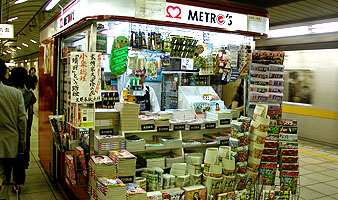
Almost every station has a Metro stand where you
can pick up the daily newspaper, magazines, mangas, updated train maps,
and much more. This is always an essential place to pick up
anything you might need if you still need to keep in touch with the
working world of business and politics and whatever else that keeps you
away from vacation. Not much different from the normal newstands
you see in New York subways or San Francisco Bay Area BART stations.
|
 |
 |
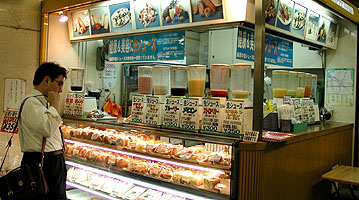
Juice bars are also available at normal working
hours, with a fresh offering of typical fruit flavors. An absolute
must for the weary traveler through all the trains! For a mere
200-350 yen = $1.75-$3.00, you can buy a cool fruit smoothie to quench
that thirst.
|
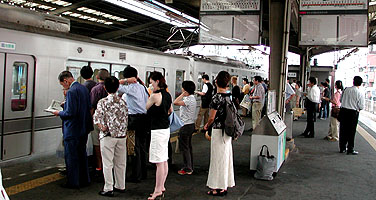
The trains are impeccably on time, every
time. And they even stop at the exact point of door arrival and
departure, which is why you'll often see lines form even before the
train arrives at heavy traffic stations. This will be a common
sight and you'll get used to it really fast.
|
 |
 |
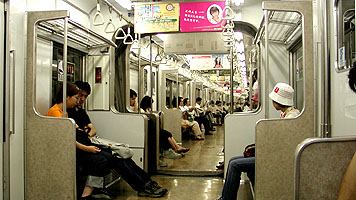
Depending on what train you'll be using and where
you'll be going, the cars are either light and airy...
|
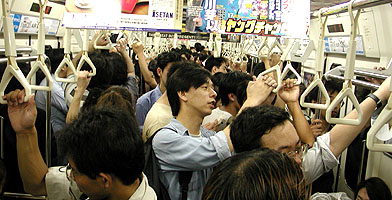
... or heavily LOADED like in this scene during
normal commuter rush hour. Again, this is common, and you'll get
used to it.
|
